Research Project By Olga Meza
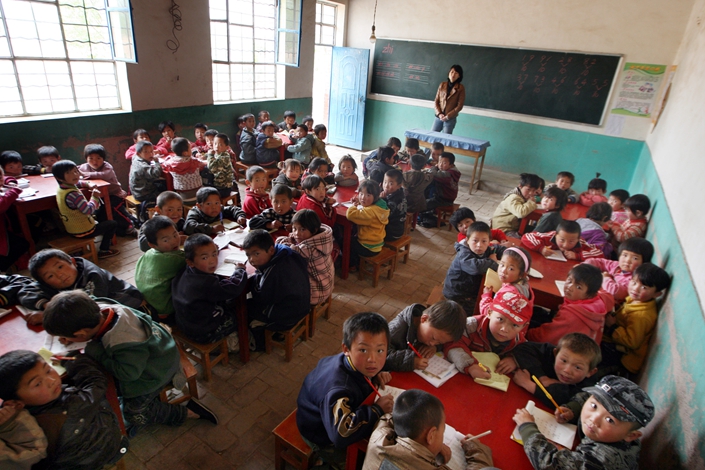
Student overpopulation and teacher performance in the classroom
1. Research Problem
Proposal of assessment strategies
for learning in e-learning model.
·
Specify the research problem
In the educational environment,
evaluation is the way to observe the students' learning and assess their level
of performance. Through the evaluation, we can identify the needs of each of
our students or, of a group in general, establish the achievements not achieved
and make improvement plans that allow students to overcome academic
difficulties that may arise, and in the same way, teachers can reconsider their
teaching strategies.
After the foregoing, the problem
is that many teachers carry out the evaluation with outdated strategies and
that do not allow observing the different skills of the students, each teacher
should integrate an evaluation strategy and a tool for each type of learning
into their planning expected and at the same time cause motivation and interest
in students.
·
Justify the research problem
To carry out an appropriate
evaluation process for our students, it is necessary to take into account some
characteristics such as:
The learning style: They are the
different ways in which a person can learn or feels more comfortable to
reinforce learning, it depends on the preferences, personality, culture and
other personal aspects of each individual that make him perceive the
information in different ways .
The teaching method: Methods used
by teachers to achieve the desired learning in students, is here where the
teaching and strategies are related according to the needs of the students
·
Describe the need to study it
The information that derived from
the evaluative methods of the teachers towards their students somehow defines
the level of learning of an individual, and this information allows the
decision making to reinforce the acquired learning and the continuous improvement
of the educational processes. The need for the problem of evaluation strategies
lies in the fact that non-innovative and attractive evaluation methods for
students reflected in the unsatisfactory results, it does not allow students to
know the real learning development of the students, and therefore neither do
they adapt the necessary learning strategies.
2. Reviewing the Literature
·
Assessing
the value of e-learning systems
Assessing the Value of E-Learning
Systems provides an extensive literature review pulling theories from the field
of information systems, psychology and cognitive sciences, distance and online
learning, as well as marketing and decision sciences. This book provides
empirical evidence for the power of measuring value in the context of
e-learning systems. Assessing the Value of E-Learning Systems offers a set of
benchmarking tools, such as the Value-Satisfaction grids and LeVIS index, to
help administrators of e-learning programs realize the key effective characteristics
of their program. The book concludes with a "cook book" guidelines
approach on how to implement the proposed theory and tools in the reader's own
e-learning program.
·
Multi-dimensional
students' evaluation of e-learning systems in the higher education
context: An empirical investigation
There has been little research on
assessment of learning management systems (LMS) within educational
organizations as both a web-based learning system for e-learning and as a
supportive tool for blended learning environments. This study proposes a
conceptual e-learning assessment model, hexagonal e-learning assessment model
(HELAM) suggesting a multi-dimensional approach for LMS evaluation via six
dimensions: (1) system quality, (2) service quality, (3) content quality, (4)
learner perspective, (5) instructor attitudes, and (6) supportive issues. A
survey instrument based on HELAM has been developed and applied to 84 learners.
This sample consists of students at both undergraduate and graduate levels who
are users of a web-based learning management system, U-Link, at Brunel
University, UK. The survey instrument has been tested for content validity,
reliability, and criterion-based predictive validity. The analytical results
strongly support the appropriateness of the proposed model in evaluating LMSs
through learners’ satisfaction. The explanatory factor analysis showed that
each of the six dimensions of the proposed model had a significant effect on
the learners’ perceived satisfaction. Findings of this research will be
valuable for both academics and practitioners of e-learning systems.
·
The
influence of learning styles on learners in e-learning environments:
An empirical study
The purpose of this study was to
compare the effects of e-learning versus those of traditional instructor-based
learning, on student learning, based on student learning styles. Another goal
was to determine if e-learning is more effective for those with a particular
learning style. The Kolb Learning Style Inventory (LSI) measured the learning
styles of students. This post-test, intact-group design examined the dependent
variable of student
knowledge based on
the learning style of each subject and the learning method to which each was
exposed. The results revealed that for the instructor-based learning class
(traditional), the learning style was irrelevant, but for the web-based
learning class (e-learning), the learning style was significantly important.
The results indicated that students with the Assimilator learning style (these
learn best through lecture, papers and analogies) and the Converger learning
style (these learn best through laboratories, field work and observations)
achieved a better result with the e-learning (web-based) method.
3. Purpose for Research Problem
All Colombian children have the
right to access to education, regardless of their origin, cultural beliefs or
socioeconomic status. To comply with this right, the Colombian government has
created policies that allow the increase in the number of students of all
levels in an establishment In order to increase coverage throughout the
country; it has resulted in the overpopulation of school classrooms and the
increase in work done by teachers in classrooms. The quality of education in
Colombia have been progressively affected due to the large number of students
that teachers must attend in a class, it is difficult to attend each of them in
just one hour of class, and even determine individual teaching-learning
strategies. The Students have lost their motivation towards classes; the number
of deserted students is growing more. Since the main purpose of the Colombian
government is to provide educational quality to children, and taking into
account the aforementioned, I define as the main objective of this research to
analyze how student overpopulation affects teacher performance.
4. Research questions
·
Does students’ overpopulation affect the
efficiency of teachers in the teaching/learning process?
·
Does the atmosphere of learning affect student's
academic performance?


6. Data
Analysis
Questions to teachers
All the information about teachers presented in each of the graphs is based on the interviews carried out during the month of April of the year 2020.
Graph 1

As observed in the results, 3 of them are graduates in English, 2 teachers are senior normalist, 2 are graduates in early childhood education, 2 are graduates in Spanish and 1 are graduates in natural sciences.
Graph 2

The interview was
carried out with 5 teachers from the public educational sector and 5 teachers
from the private educational sector, therefore the results were 5 teachers
working in public educational institutions and the other five working in
private educational institutions.
Graph 3

When comparing the
grades in which the teachers who took the interview teach classes, we can see
that 5 of them belong to high school, 3 belong to primary and only 2 to
preschool education
Grahp 4

The number of
students per classroom had some variations, 5.50% of the classrooms have more
than 30 students, 3.30% of the classrooms have between 16 and 25 students,
2.20% have between 26 and 30 students and lastly, none of the interviewees
reported having between 10 and 15 students per classroom.
Graph 5

Regarding the
learning strategies used by teachers in the classroom.
we can see that 3 of
them use collaborative work, 2 use motivation as the main strategy, 2 teachers
prefer to make seating arrangement in the classroom, 1 used feedback as a
teaching tool, 1 allowed all students to participate without anyone being left
out, and 1 more carried out dynamic classes that caught the student's attention
Graph 6

Talking about the
support that teachers have in the classroom through auxiliary teachers, we can
see that only two teachers stated that they have auxiliaries and eight teachers
say they do not have any type of collaboration from an auxiliary teacher.
Graph 7

When the teacher
enters the classroom, the first thing he does is organize the classroom.
According to the
interviews we can observe that, 5, 50% of teachers invest between 5 and 10
minutes of their class for order, the 3.30 of the teachers claim to spend 5
minutes of the class, and 2.20% consume more than ten minutes of class in the
classroom order of class.
Graph 8

One of the most
important factors is teacher training, regarding this topic we can see that 7
teachers say they have not received training for teaching and learning in
overcrowded courses, two more say they receive this training every 2 or 3
months and only one person He claims to receive it every 6 months.
Graph 9

As teachers, we set
clear objectives for teaching and learning, 4.40% of teachers answered that
they want to provide students with active and dynamic learning, 3.30% answered
motivation to learning and the other 3.30% answered significant learning.
Graph 10

Lastly, we refer to the tools provided to teachers for the development of their classes. From this question, 6 people claimed not to have these tools and 4 people say that they are provided.
7. Discussions
Education is one of
the most important factors in the development of a country and provides the
habitants with better opportunities for development.
Due to the new
programs implemented by the Colombian country in which it is intended to
guarantee education to all the boys and girls in the country, there has been a
great increase in the enrollment of public and private educational
institutions; however in our country the highest number of students per
classroom is the public sector. After all this, it has been possible to observe
many changes in the classroom environment, in the performance of students and
in the performance of teachers as the capacity to serve more students has to be
increased in the same amount of time and with the same tools.
With this tool
research, we want to verify the effects that student overpopulation has on the
performance of teaching, according to this, we can see that public schools have
more students per course than private schools.
Teachers in this
situation use strategies such as collaborative work, motivation, seating
arrangement in the classroom, feedback, allowed all students to participate and
dynamic classes that caught the student's attention. Very few educational
institutions provide training to teachers for proper management of overcrowded
courses, and this leads teachers to have the feeling of lack of tools to help
them improve their teaching.
I consider that the main thing in education is teacher training to be able to have knowledge about the correct way to face the challenges that arise in the classroom. As teachers, we must create strategies that help us mitigate the effects of overpopulation and in some way self-prepare to reach each of our students and guide them in their learning process. Teacher training seeks to be more efficient and effective in recognizing what one has individually, wealth as attitudes that allow us to be better in everything that wed do. The possibility of reflecting on various topics that help to strengthen teacher performance can make a difference, especially when they have to face the challenges alone.


